
DJ Co-Ops — Multi-State USDA Foods Cooperative Platform
Historical · 2011–2015 stewardshipCalifornia Super co-op instance, 2011–2015 — cooperative coordination across school districts, food distributors, food processors, and commodity-balance reporting under USDA regulatory authority.
SCVdata supported the final operating years of a 25-year multi-state U.S. Department of Agriculture (USDA) Foods cooperative platform spanning California, Ohio, and Michigan. Preserved system evidence documents 1,600+ cumulative school district/vendor records, a 130+ company food processor catalog, 16+ food distributor relationships, and 600,000+ preserved rebate transaction lines — all coordinated through legacy ASP.NET, SQL Server, Crystal Reports, commodity-tracking feeds, entitlement controls, order workflows, and reconciliation tools.
DJ Co-Ops federated a network of 13 distinct member-bearing cooperatives across California, Ohio, and Michigan. It was not a small departmental tool; it was a multi-state cooperative operating platform for USDA Foods purchasing, entitlement tracking, food processor coordination, food distributor reporting, and volume-rebate reconciliation. The preserved master directory included a 15-entry cooperative-network directory, and the 2005-2012 rebate evidence alone contains 1,600+ cumulative school district/vendor records. The platform maintained a 130+ company food processor catalog, coordinated 12 rebate-program food distributors and 16+ broader food distributor relationships, processed more than 600,000 preserved volume-rebate transaction lines, and managed over $52 million in annual USDA Foods entitlement for California alone in SY 2014-15. SCVdata's role was to keep that production environment stable while improving automation, reporting, and workflow controls for a much larger cooperative support base than the reconstructed demo dataset shows.
The entire operation ran on a legacy ASP.NET / VBScript / MSSQL 2005 environment that had accumulated years of organic growth, and the original development had outpaced the current operational complexity. The system was business-critical and live. School districts placed annual orders against state-set entitlement caps. Food processors submitted velocity reports under RFP timing constraints. Rebates flowed back to school districts on an annual cycle that touched every party in the ecosystem. Refactoring had to happen in production, without disrupting the operational rhythm.
For prospective clients, the significance of DJ Co-Ops is scale and responsibility. SCVdata was trusted with a production environment where software reliability, data reconciliation, reporting accuracy, and operational continuity directly affected hundreds of public-agency foodservice customers and a broad supplier/food distributor network. The engagement demonstrates SCVdata's ability to inherit a complex system, understand the business process behind the code, stabilize aging infrastructure, and deliver practical automation without disrupting daily operations.
A public browser-based reconstruction shows how the major workflow surfaces of the DJ Co-Ops cooperative tracking system operated for the parties using it. The demo uses synthetic data throughout — no live client, student, USDA, or production data — and adds shared role, school district, and quarter context controls so the same cooperative workflow can be viewed from school district, food distributor, and administrator perspectives. Modules respond differently depending on context: some filter by school district or quarter, some expose aggregate portfolio views, and others show honest full-year notes where the historical workflow did not contain true quarter-level data.
The reconstruction goes beyond a static screen mockup. It demonstrates the coordination logic behind the original platform: different organizations needed access to the same cooperative workflow, but not the same authority, detail, or operating controls. Separating “who am I?” from “what am I looking at?” is the operating principle that made the platform work for a cooperative network of 200+ school districts in California alone, and the demo makes that principle visible in the browser.
- Role-aware views for school district, food distributor, and administrator users
- Acting identity (role) separated from viewing scope (school district + quarter)
- Shared school district and quarter controls across the operating modules
- Annual order, entitlement, reports, truck allocation, volume rebate, exception queue, and operating-model surfaces
- Quarter filtering where the synthetic data supports it; honest full-year notes elsewhere
- Aggregate portfolio views for distributor and administrator users
- Guarded workflow actions where school district users should not control portfolio-level operations
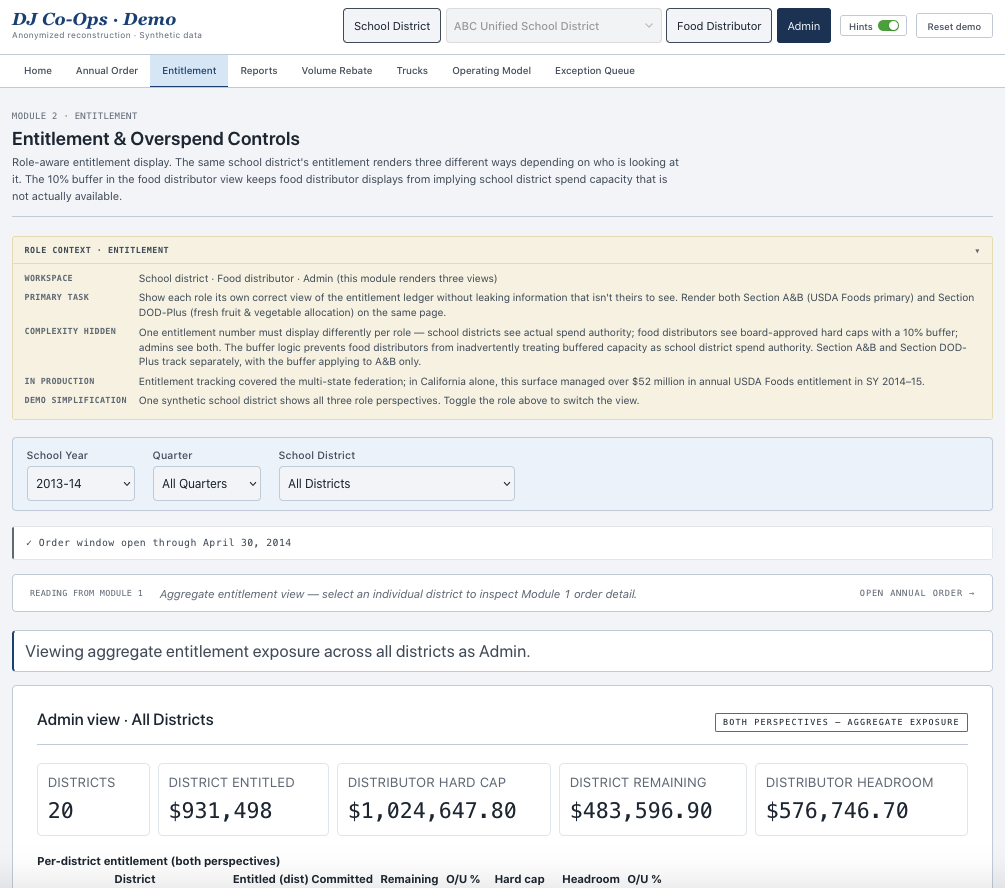
Entitlement module shown to an administrator with All Districts and full-year scope, demonstrating the role and context controls shared across the demo.
SCVdata stewarded and extended the inherited DJ Co-Ops application stack: a dual-database MSSQL 2005 environment with the Web Database hosted in Arizona as the primary hub and the Office Database in California for back-office operations, an ASP.NET 4.0 member-facing website, an Orders Program, and a CTS Program responsible for synchronizing the two databases. Reporting ran on Crystal Reports; UI grids used Infragistics. Data import from food processors landed in a sequenced VBScript pipeline operating in the data_import folder on the production server.
Across approximately four years and four full annual operational cycles, the work focused on:
- District annual ordering — three calculation modes (raw commodity cases, end products, meals served × days served), spanning items routed to food distributors and items routed to food processors
- Entitlement tracking and overspend controls — role-aware views, with school districts seeing their own remaining entitlement and food distributors seeing a board-approved hard cap including a 10% buffer applied at the food distributor layer only, to prevent school districts from misreading the buffer as additional spend capacity
- Processor and distributor sales-data ingestion — eight named server scripts in the data-import pipeline, handling sales-record import, queue setup, entitlement-spend calculation, sales-queue processing, commodity-balance calculation, and K12 balance import
- Volume rebate reconciliation — an annual multi-month process matching processor velocity reports against distributor velocity reports, normalizing inconsistent vendor formats, cross-referencing RA numbers, and generating per-district payout sheets
- Multi-party commodity balance reporting integration — K12foodservice, ProcessorLink, and Lunchline, each with different reporting conventions absorbed by an internal lookup table layer
- Inter-district commodity trade board — a peer-to-peer advertisement surface where school districts posted surplus commodity allocations for swap with other school districts in the co-op
- 125 unique Crystal Reports spanning entitlement, allocation, payout, quarterly usage, and processor / distributor reporting surfaces
- Multi-generation modernization — Visual Studio 2005 to Visual Studio 2010 development environment migration; preplanning workflow migrated from legacy Access databases into ASP.NET
Before: a multi-state co-op administrator running USDA Foods purchasing across hundreds of school districts and dozens of food processor and food distributor partners through layered Excel pivot tables, inherited spaghetti code, and manual data normalization for every annual rebate cycle. After: a stewarded, progressively refactored, and modernized live software environment, with the same business operating on the same calendar but with the operational complexity now absorbed by the system instead of by the people running it.
The production stack was a dual-database MSSQL 2005 environment (Web Database hosted in Arizona as primary hub; Office Database hosted in California for back-office operations) with ASP.NET 4.0 frontends, VBScript-based server-side data-import scripts, Crystal Reports for reporting, and Infragistics for grid UI. SCVdata's engagement spanned approximately four years (2011–2015) and four full annual operational cycles.
Underneath the public-facing workflows was a substantial production schema: 28 first-class tables modeling school districts, school district-by-year membership, cooperatives, cooperative groups, food processors, food distributors, brokers, offerings, orders, order details, truck allocations, split amounts, invoices, fees, responses, accepted items, processor offers, entitlement types, valid years, defaults, file loads, and state-level configuration. SCVdata's stewardship required understanding both the business process and the inherited technical architecture well enough to keep daily operations moving while incrementally improving automation and reporting.
Commodity reporting was anchored by K12 Foodservice production feeds — the dominant third-party commodity-tracking platform in K-12 foodservice with roughly 80% market share. The platform also maintained mapping infrastructure for the competing ProcessorLink platform (26 manufacturers mapped), planning references for the Lunchline platform, a direct food processor reporting channel for Don Lee Farms, and a direct food distributor reporting format for Goldstar — covering both the dominant K12 ecosystem and the partners outside it.
Historical training materials preserved snapshots of the production interface across several operating years.
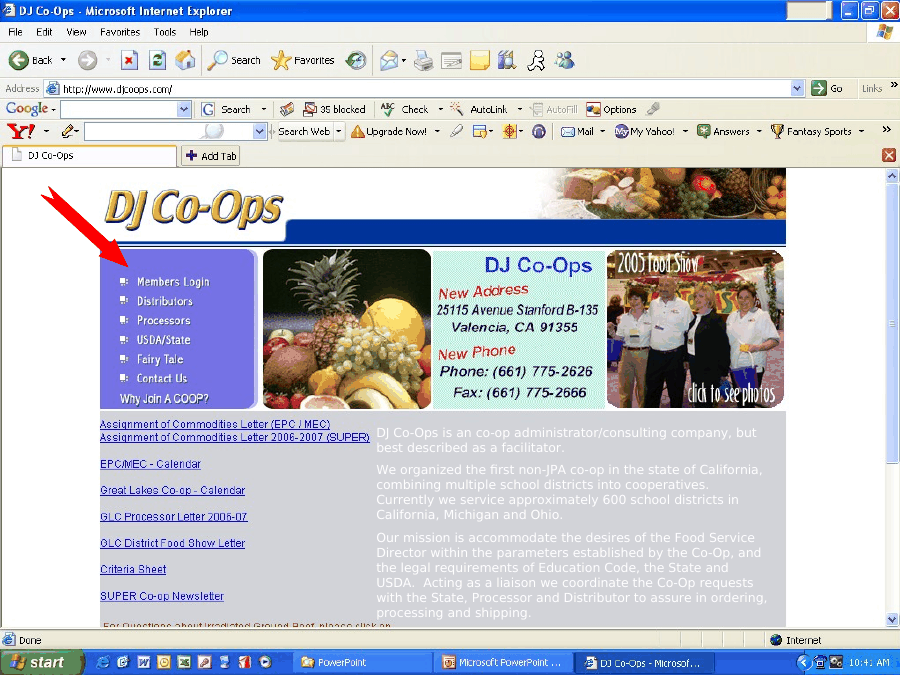
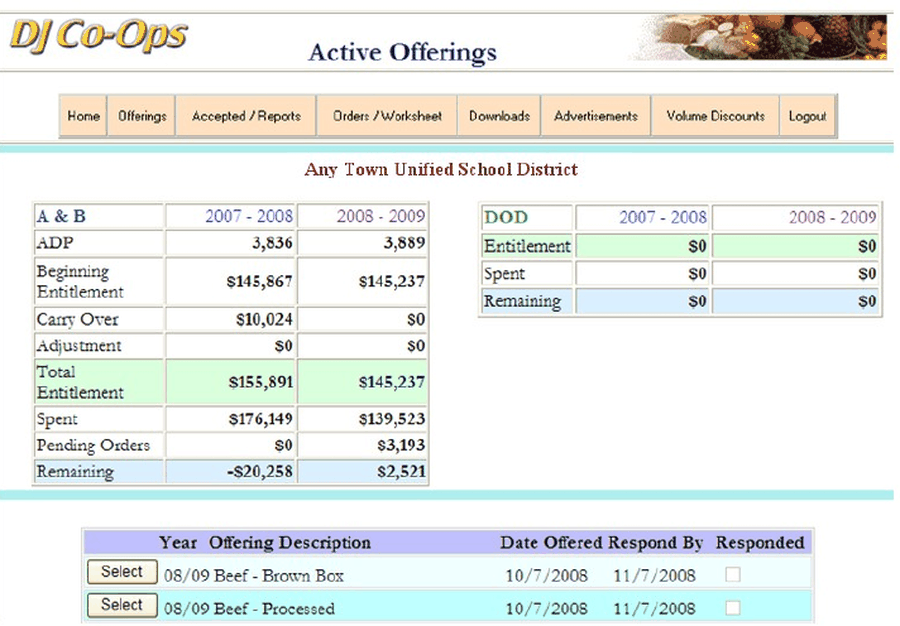
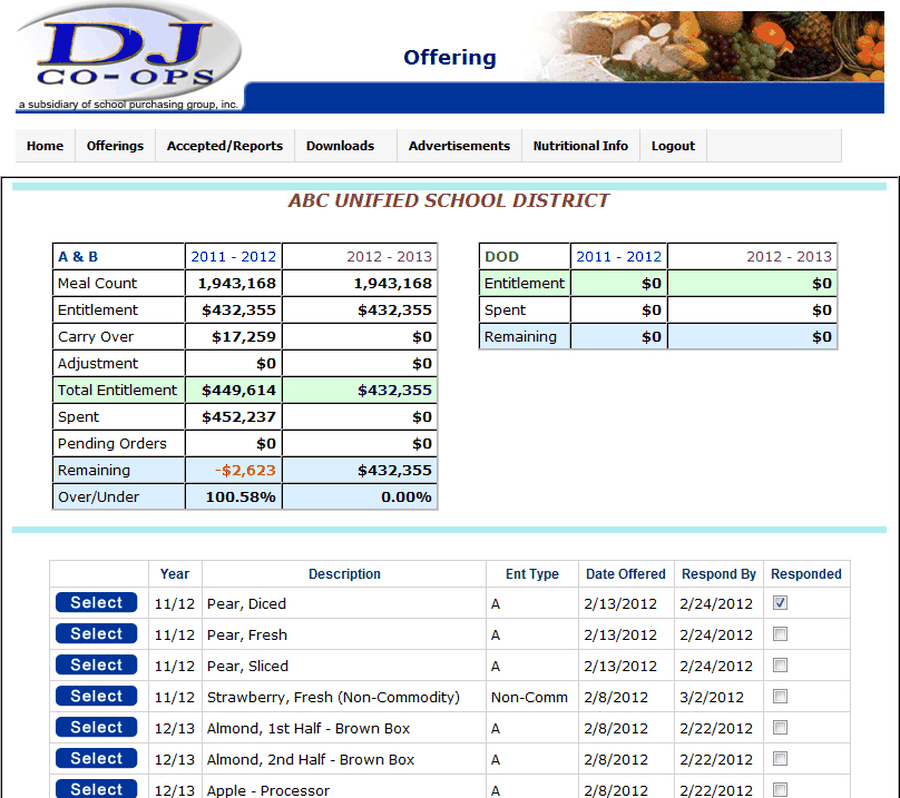
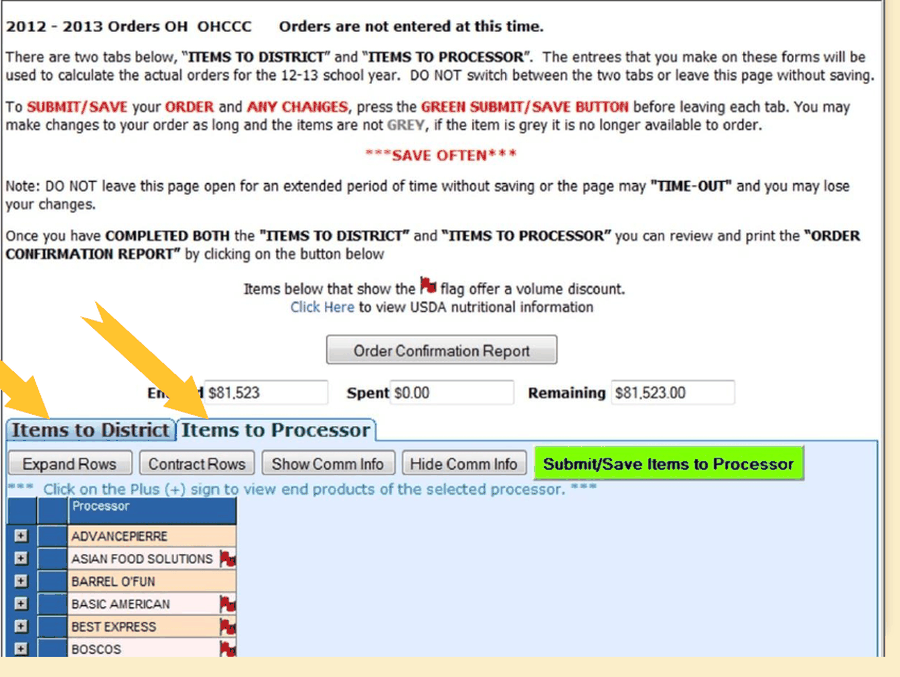
The companion demo at djcoops.scvdata.com is an anonymized reconstruction with synthetic seed data of 20 school districts, 6 food processors, and 3 food distributors for clarity. In production, the platform coordinated 1,600+ cumulative school district/vendor records, 130+ food processor companies, 16+ food distributor relationships, and 600,000+ rebate transaction lines between 2005 and 2012. The reconstruction's interface and workflow structure are drawn from the actual DJ Co-Ops production application (active circa 1990–2015) that SCVdata stewarded during its final four operating years.